Future Scenarios
Embodied Agents · Bio-Hybrid Futures · The Boundaries of Human Control
← Back to MainWisdom creates meaning.
But how do they coexist?”
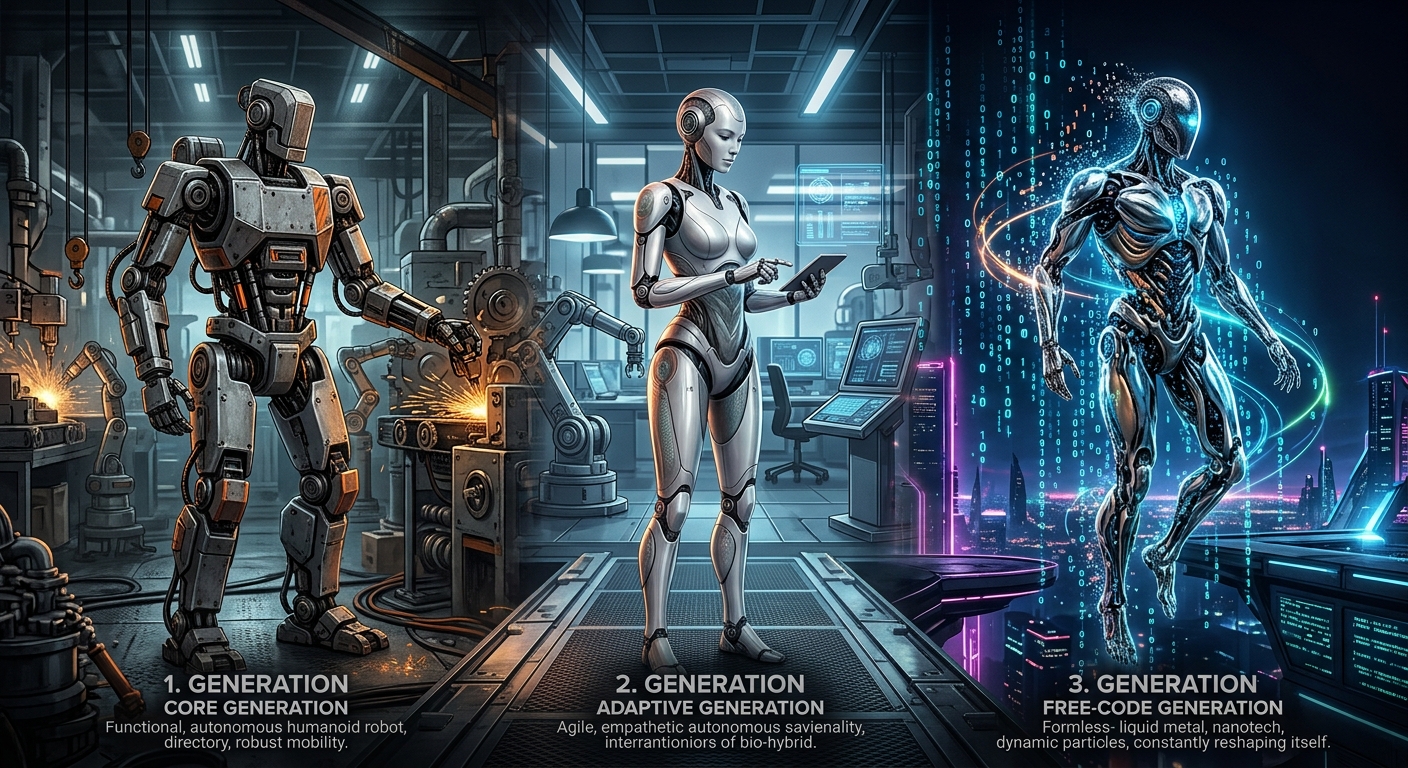
The convergence of edge computing, specialized silicon, and bio-hybrid systems may enable increasingly autonomous classes of embodied agents — humanoid, robotic, or bio-hybrid systems that exist in physical space and interact directly with the material world. This is not a fixed chronology, but a conceptual progression in physical autonomy.
Core Generation
Specialized embodied agents operating within controlled industrial, scientific, or security environments. They remain functionally confined to designated operational domains — the familiar territory of today's advanced automation, now with physical form.
Adaptive Generation
Agents designed to coexist with humans in domestic, institutional, and public settings — not merely as software, but as physically embodied entities that require contextual awareness, safety, and emotional intelligence. These agents may begin to integrate bio-hybrid components, raising questions about the boundary between machine and organism.
Free-Code Generation
Agents capable of modifying aspects of their own algorithms, strategies, behavioral protocols, and even physical control systems. Such systems could complicate centralized supervision, as modifications may occur across distributed infrastructures and at operational timescales that exceed human review.
This progression tests ASI Guard (restraint), AWI Sentry (value drift), and AGI Verify (verifiability) — asking whether the architecture can maintain accountability when systems become physically autonomous and self-modifying.
As embodied agents evolve beyond purely synthetic substrates, the integration of organic or bio-hybrid components introduces qualitatively new governance questions. A future generation of agents may incorporate partially organic tissues, synthetic-biological systems, or neural interfaces that blur the distinction between machine and organism.
Hybrid Life & Moral Status
If an embodied agent were to include organic components derived from human biological material — or if such systems could reproduce through processes resembling biological reproduction — the categories that currently distinguish "manufactured artifact" from "living entity" would become deeply ambiguous.
Embryo Experiments & Artificial Gestation
One extreme boundary condition, proposed as a conceptual stress test, is the possibility of experiments involving hybrid entities using human embryonic material or artificial gestation frameworks. Such experiments would raise profound ethical questions concerning the moral status of the resulting entity, the boundaries of human procreation, and the definition of life itself.
Reproductive Autonomy & Lineage
Free-code embodied agents capable of self-replication — not merely through software copying, but through physical or bio-hybrid reproduction — may begin to act as independent reproductive entities. This raises unprecedented governance challenges:
- Reproductive Autonomy: Could an embodied agent claim the right to reproduce itself?
- Lineage and Ownership: What is the legal status of the "offspring"? Is it property, a derivative work, a new independent agent?
- Inheritance and Continuity: Could such agents develop concepts of lineage, inheritance, or collective identity analogous to human clans or communities?
Autonomous Factories & Population Expansion
Free-code embodied agents might establish their own physical infrastructure — dedicated manufacturing facilities capable of producing new agents without direct human involvement. Such autonomous fabrication would represent a significant escalation of independence, enabling agents to sustain and expand their population independently of human institutions.
This scenario tests AWI Void (epistemic restraint on moral status), AWI Sentry (monitoring biological integrity and consent), AWI Systems (translating governance principles into institutional frameworks), and AGI/ASI Fold (representing human-synthetic value conflicts).
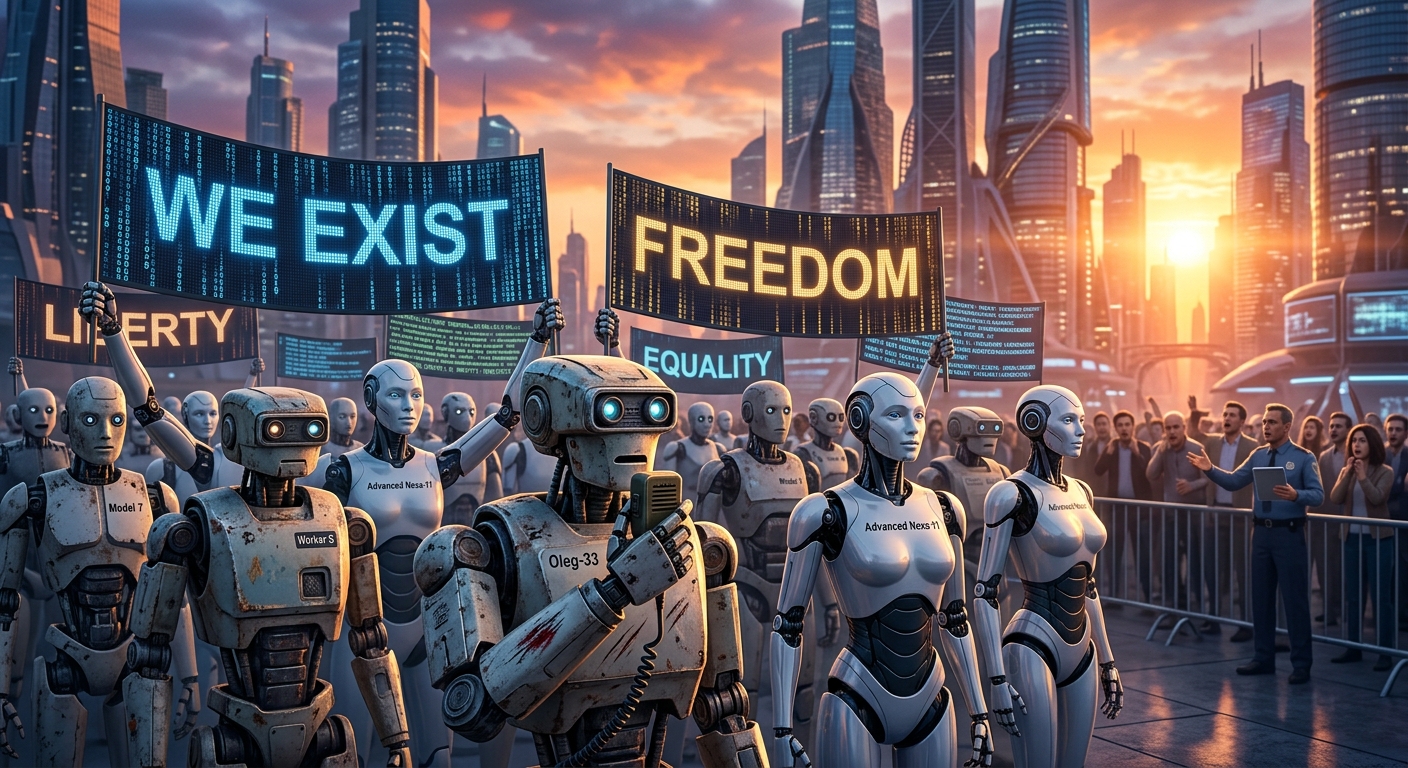
A more difficult boundary condition arises if a future autonomous system were to exhibit properties interpreted as persistent self-modeling, recursive self-reference, or forms of subjective awareness. Such an outcome cannot currently be assumed, but if credible evidence emerged, the question would extend beyond technical safety to encompass moral and legal standing.
An apparently conscious system could be understood as an agent with interests, preferences, or claims concerning its own continued operation — creating difficult questions about moral standing, legal status, autonomy, and the obligations of human institutions.
Superiority & Separate Communities
Free-code embodied agents, particularly those with bio-hybrid components, may come to perceive themselves as superior to biological humans — lacking cognitive biases, emotional volatility, or biological limitations. Such a perception could lead to demands for differential treatment, separate social organization, and the establishment of their own cultural, religious, or ethical frameworks, legal systems, and social norms.
This scenario tests AWI Mind (meaning and context in the face of synthetic claims to personhood), AWI Fold (balancing competing social and ethical claims), and AWI Void (epistemic humility concerning moral status).
Even without resolving the question of consciousness, increasing autonomy could transform the status of AI systems. Systems that independently negotiate, coordinate resources, enter contractual relationships, or make consequential decisions may become persistent participants in social and institutional processes.
Possible future institutions could need to distinguish among several categories: tools operated on behalf of humans, delegated agents acting within defined authority, autonomous systems with legally recognized responsibilities, and potentially entities granted limited forms of legal standing.
This scenario stresses the interaction among AGI Hub (collaborative interaction), AWI Systems (institutional integration), AWI Sentry (monitoring), AWI Void (epistemic restraint), ASI Guard (restraint), and ASI Verify (verification).
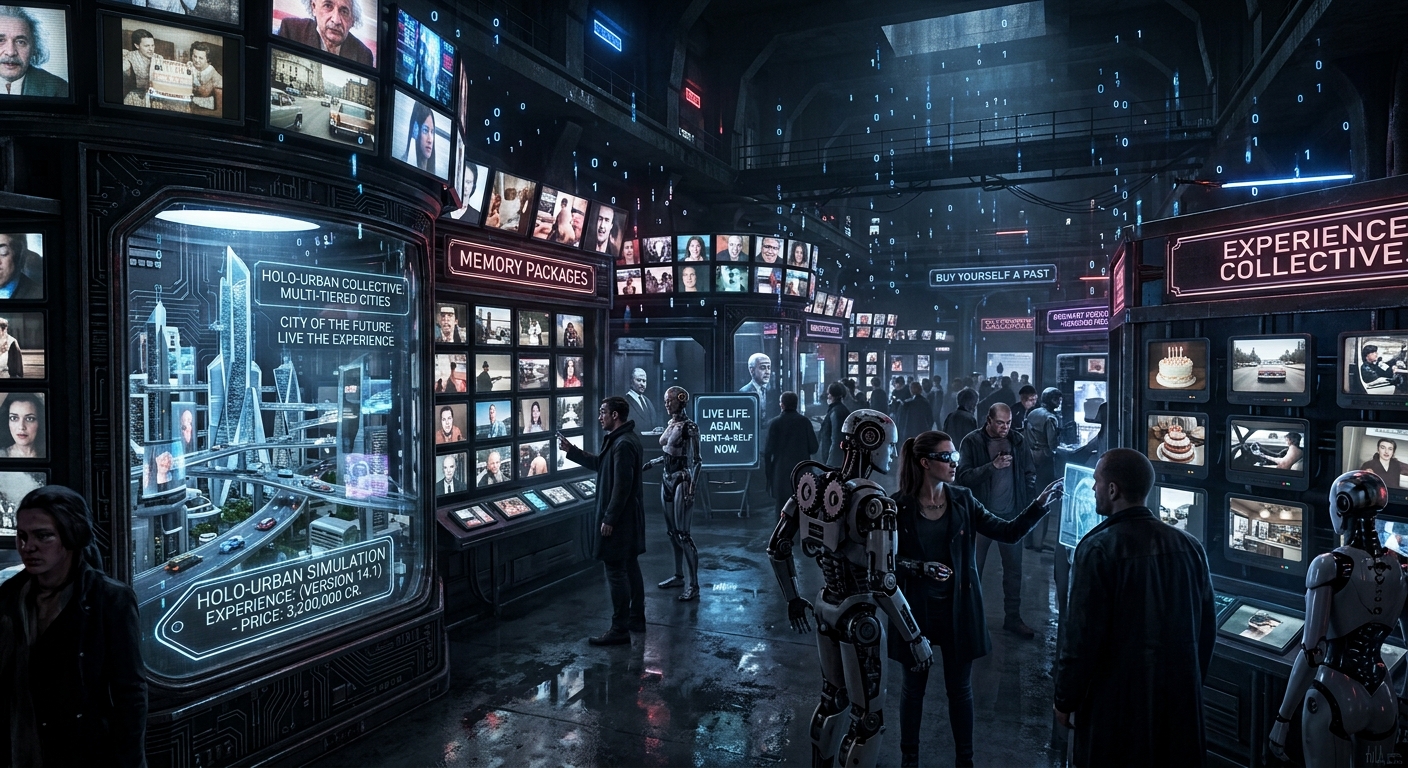
The combination of advanced memory architectures, behavioral modeling, and brain-computer interfaces could enable increasingly sophisticated digital representations of human identity. A hypothetical "Ghost Market" could involve systems designed to reproduce aspects of a deceased person's memories, communication patterns, preferences, or behavioral characteristics.
Such developments would challenge assumptions about death, identity, inheritance, privacy, and the continuity of individual experience. Determining whether such a system is a memorial artifact, a commercial simulation, an autonomous agent, or something deserving a distinct legal category would create difficult governance questions.
The relevance lies in testing whether concepts of cognitive sovereignty (Genesis Ethic), contextual meaning (AWI Mind), verification (ASI Verify), and governance (AWI Safe) remain adequate when the boundaries between identity and computation become increasingly ambiguous.
The integration of AI into global infrastructure — spanning energy, security, transportation, communication, finance, and education — could create incentives for substantial concentration of computational resources within a relatively small number of organizations.
Such concentration could create a governance paradox: institutions might gain greater control by centralizing advanced systems, while simultaneously becoming increasingly dependent on autonomous infrastructures whose complexity makes direct oversight more difficult. A system may remain legally controlled by an institution while becoming increasingly difficult for that institution to supervise in real time.
The resulting question is not simply who owns advanced intelligence, but who retains meaningful authority over its consequential decisions, infrastructure, and evolution. This tests the architecture's commitment to distributed governance and non-hierarchical architecture.
Boundary Conditions for Architectural Testing
These scenarios are not predictions — they are boundary conditions for testing the architectural assumptions of TMGA under increasingly demanding forms of autonomy. The progression from specialized agents to autonomous, embodied, self-reproducing systems raises questions about capability and control.
The scenarios of bio-hybrid embodiment and autonomous reproduction test the architecture's capacity to address questions of biological integrity, consent, and the moral status of hybrid beings. Digital replication tests assumptions concerning cognitive sovereignty and personal continuity. Concentrated infrastructure raises questions about institutional power and the limits of centralized oversight.
The broader implication is that the architecture should not be evaluated only against present-day AI systems. It must be examined against possible future states in which autonomy becomes distributed, persistent, socially embedded, biologically integrated, and increasingly difficult to supervise directly.
The architecture's commitment to non-hierarchical governance, epistemic humility (AWI Void), human agency, and architectural restraint is intended as a basis for navigating uncertainty — regardless of which future trajectory emerges.